Why bigger mattered
A larger mirror is a larger bucket for ancient light.
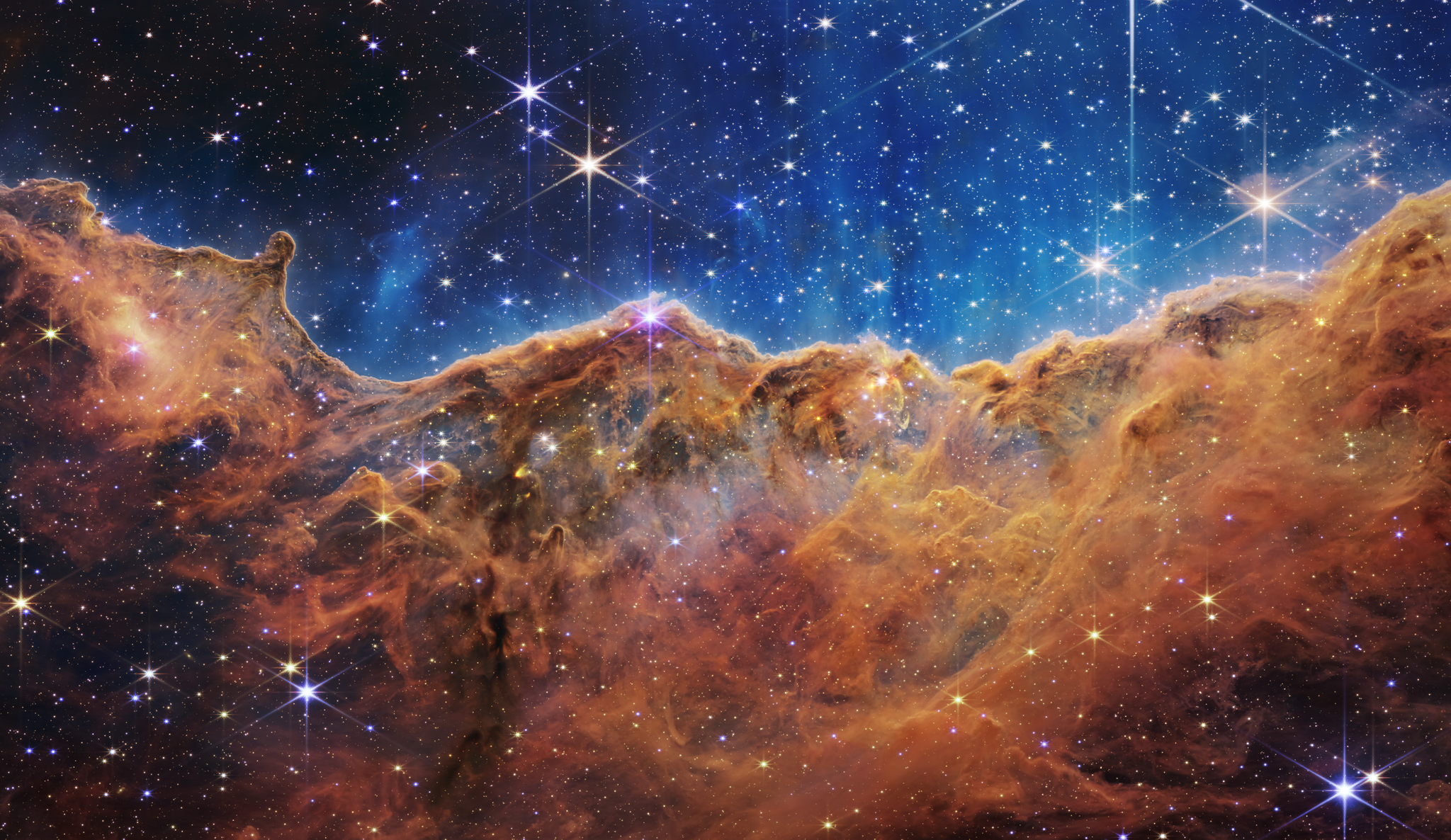
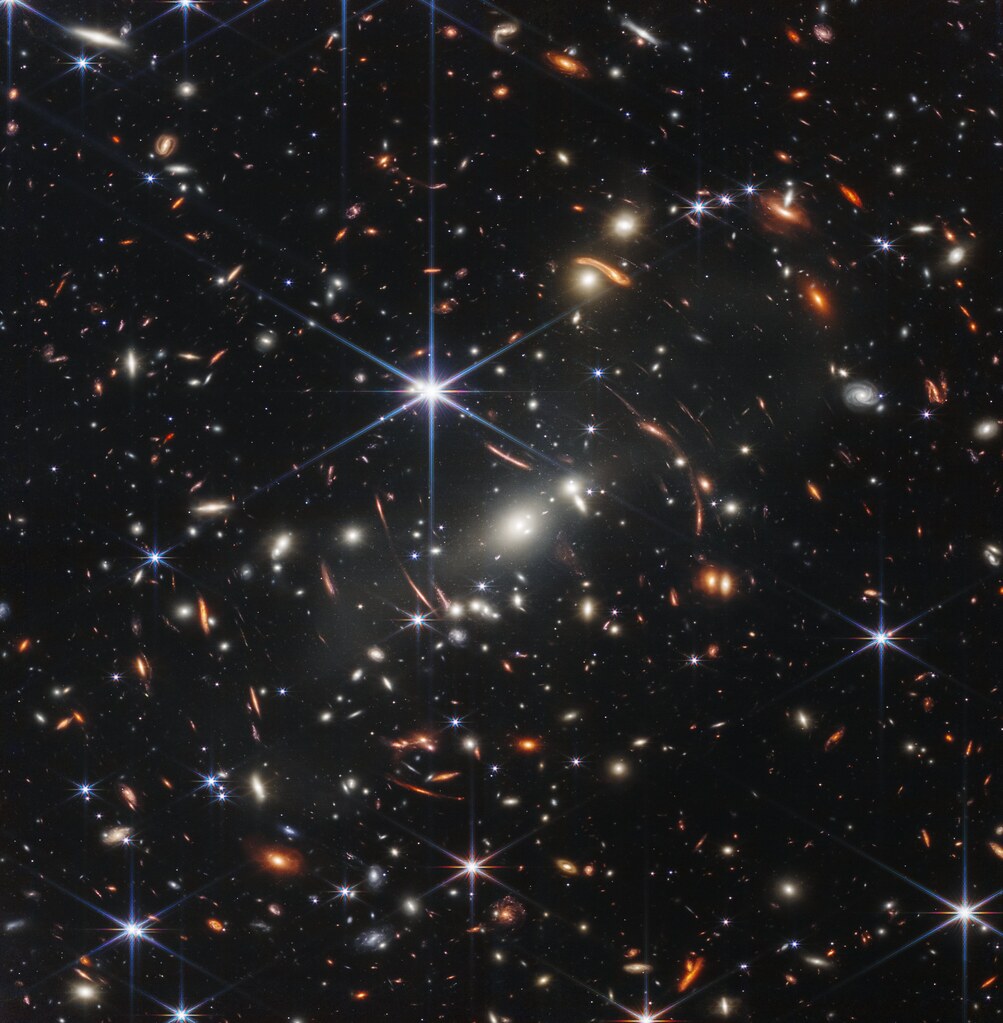
NASA explains Webb needed a 6.5-metre primary mirror to measure light from galaxies more than 13 billion light-years away. Sensitivity rises with collecting area: more mirror means more photons from fainter, older targets.
6.5 m21 ft 4 inlargest launched
The optical relay
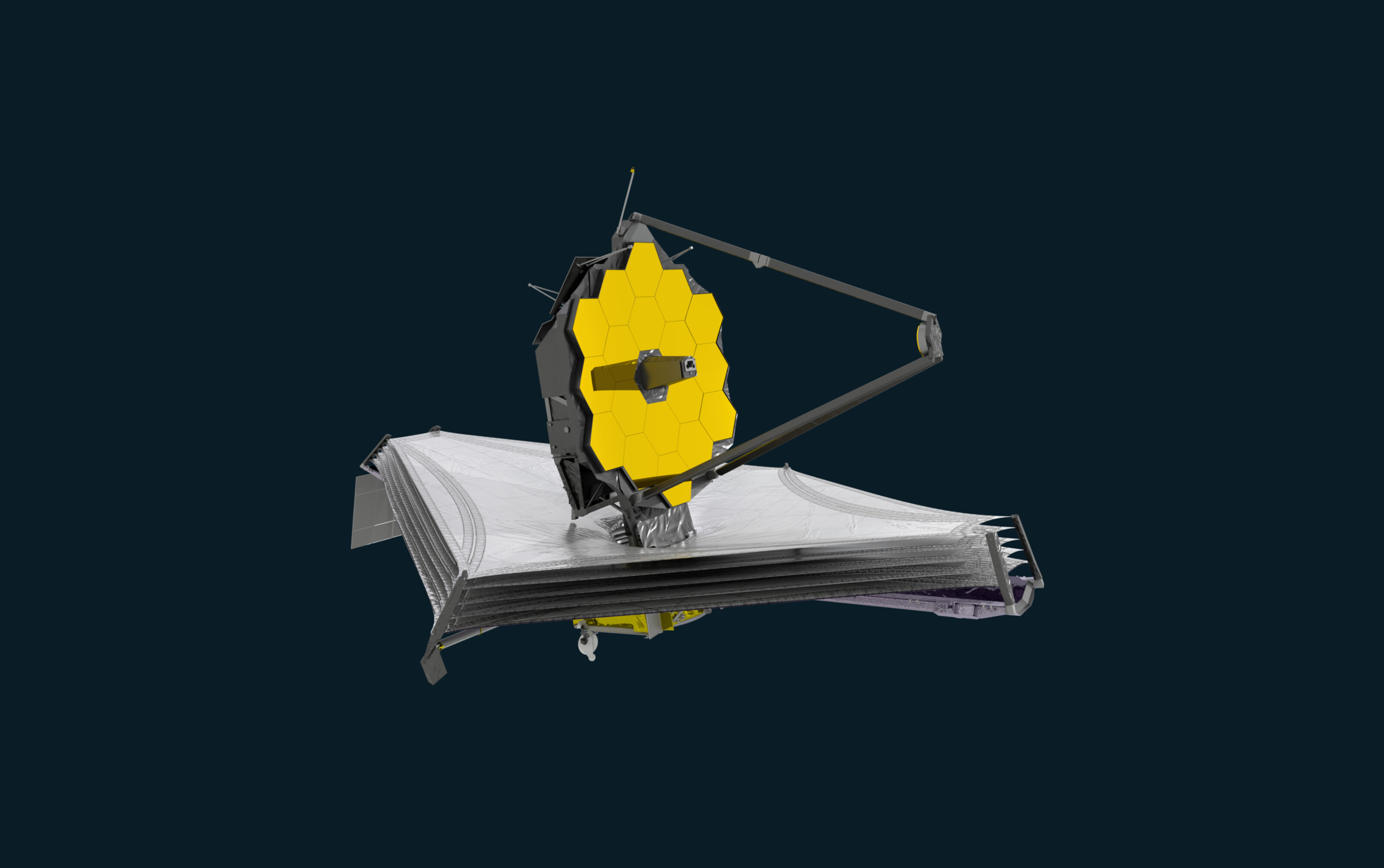
The famous gold honeycomb is only the first act.
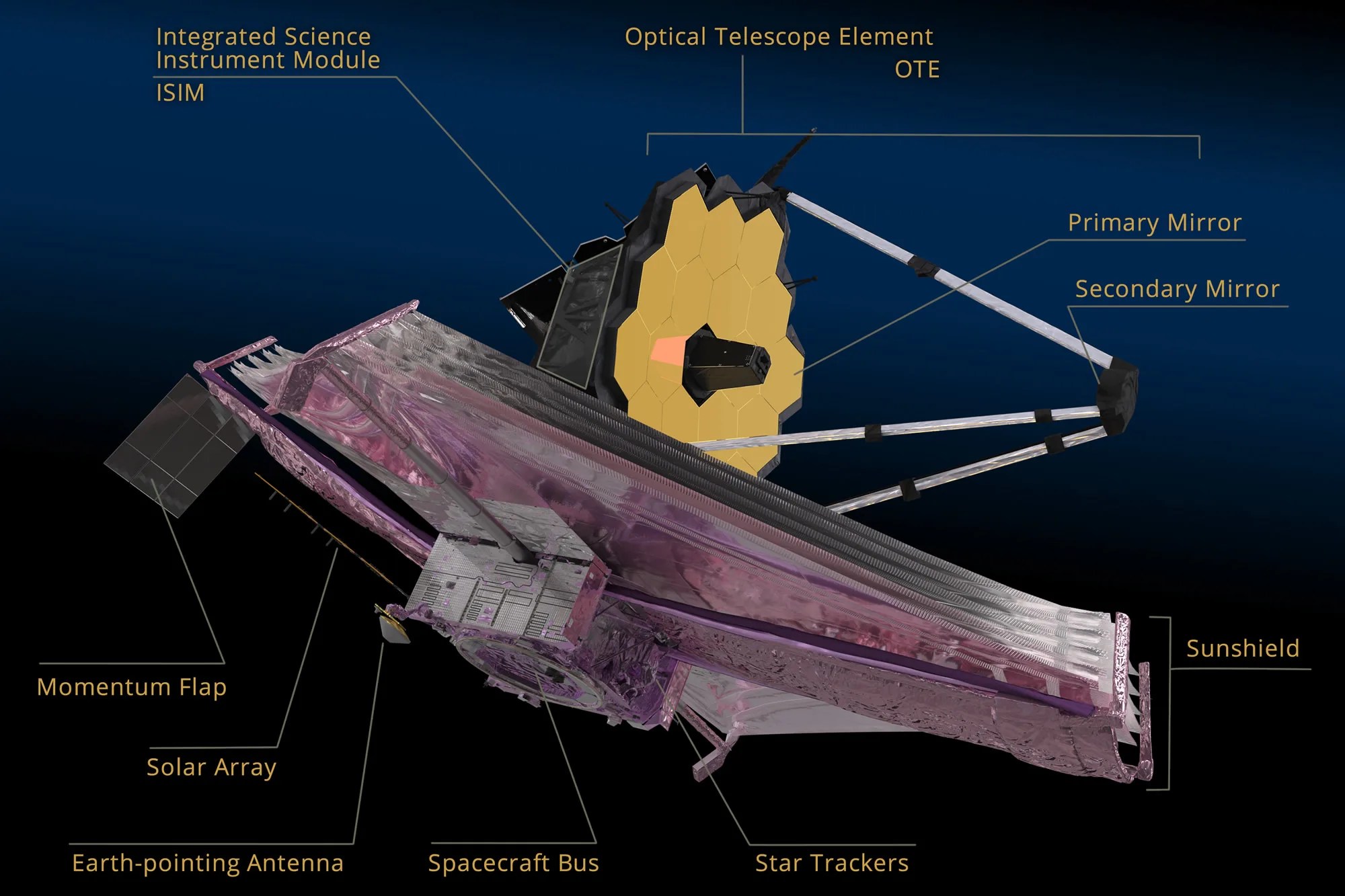
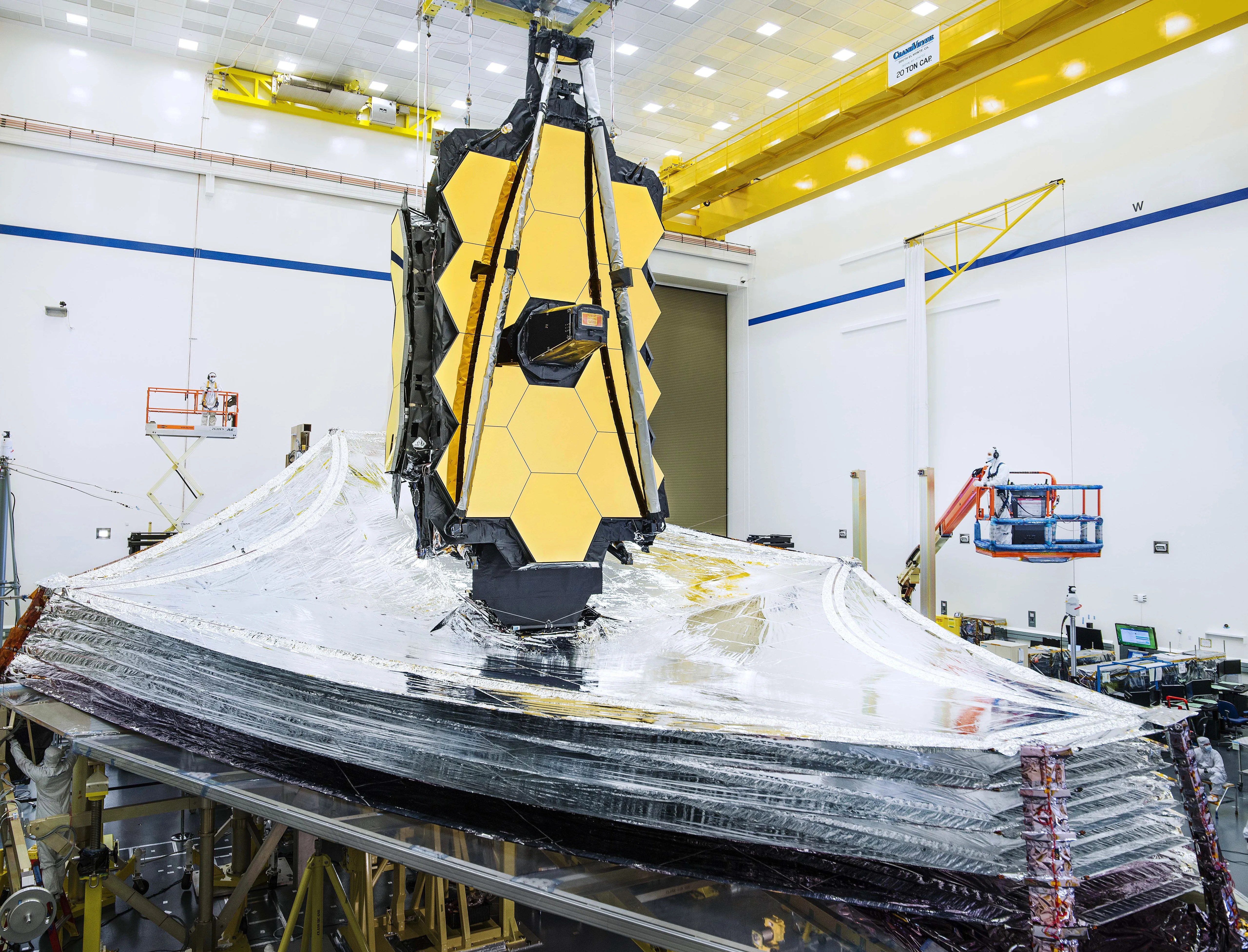
Webb has four mirrors: the 18-segment primary, a round secondary mirror on folding booms, a tertiary mirror, and a fine steering mirror. Together they gather, redirect, correct, and stabilise light before it reaches the instruments.
PrimarySecondaryTertiary + FSM
Launch origami
The mirror had to fold because the rocket was smaller than the science.
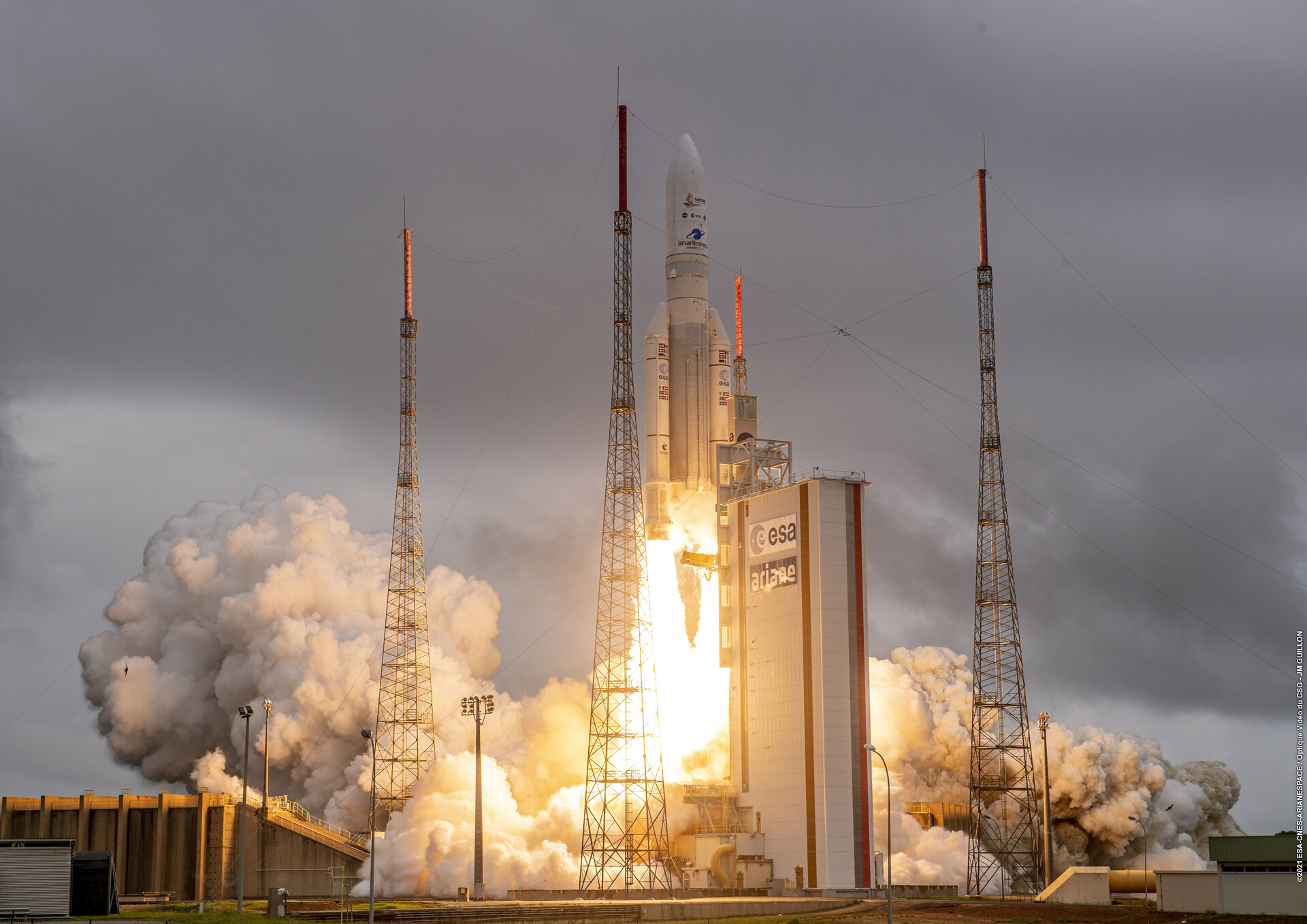
Webb’s primary mirror was too wide for the launch vehicle, so the team segmented it and folded two mirror wings. Each wing carried three primary mirror segments and deployed after launch.
18 segments2 folding wings1.32 m each
Why hexagons?
Hexagons pack tightly, point cleanly, and keep the mirror nearly circular.
The hexagonal shape gives Webb a high filling factor with no big gaps, six-fold symmetry, and only three optical prescriptions for all 18 segments. A rounder overall mirror focuses light more compactly onto detectors.
No big gapsSix-fold symmetry3 prescriptions
Tiny motors, giant consequence
The mirror became sharp by moving in nanometres.
Each primary segment and the secondary mirror use six actuators. The primary segments also have a central actuator that adjusts curvature. NASA says aligning the segments as one mirror required precision around 1/10,000th the thickness of a human hair.
6 actuatorsCurvature controlWavefront tuning
Cold or blind
Infrared astronomy only works if the mirror does not glow.
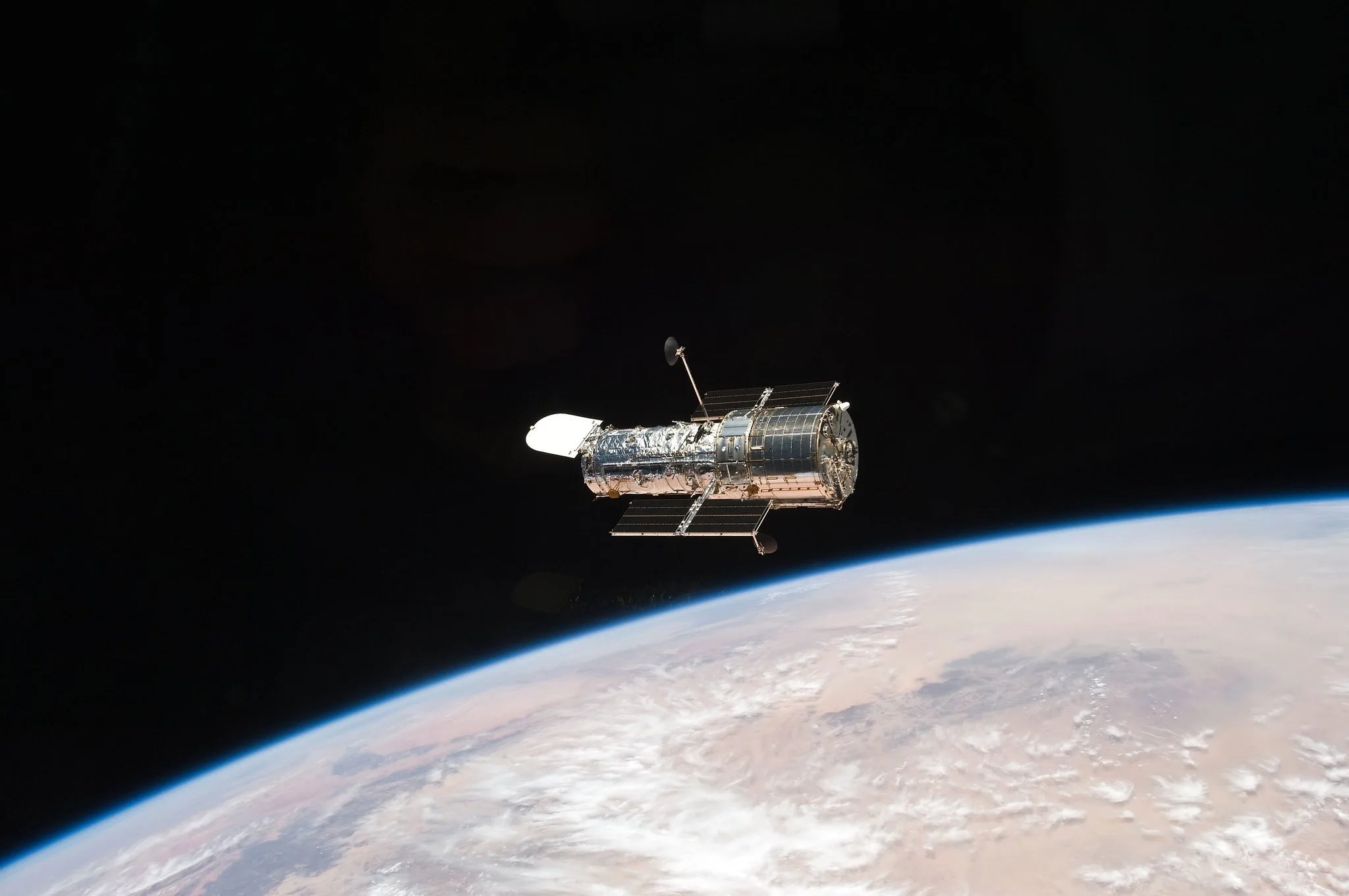
Warm objects emit infrared light. If Webb’s mirror were warm like Hubble’s, its own heat would drown out the faint infrared signals from early galaxies. Webb’s mirrors operate at roughly -220C, protected by deep space and the sunshield.
-220CCryogenicSunshield protected
The hidden road trip
The mirror was not built in one place. It travelled like a relay baton.
The 18 beryllium mirrors made 14 stops across 11 places in the United States, passing through eight states before launch. The beryllium began in Utah, was purified in Ohio, shaped in Alabama, polished in California, and cryo-tested in Alabama.
14 stops11 places8 states
Gold skin
The gold is thinner than it looks, and protected by glass.
The mirror coating was applied by vacuum vapour deposition. NASA lists the gold layer at about 100 nanometres thick, with a thin amorphous silicon dioxide layer above it to protect the soft gold surface from scratches and particles.
Vacuum coated100 nm goldSiO2 protection